
Helping You To Better, Brighter Future
Better Futures Club is committed to helping people and families take control of their finances.
Credit unions offer a fairer, more community-focused way to save and borrow, especially for people who want affordable loans, ethical banking, and support that puts members first.
We’ve pulled together clear, UK-focused information on how credit unions work, what makes them different from banks, and how you can find and join one that’s right for you.
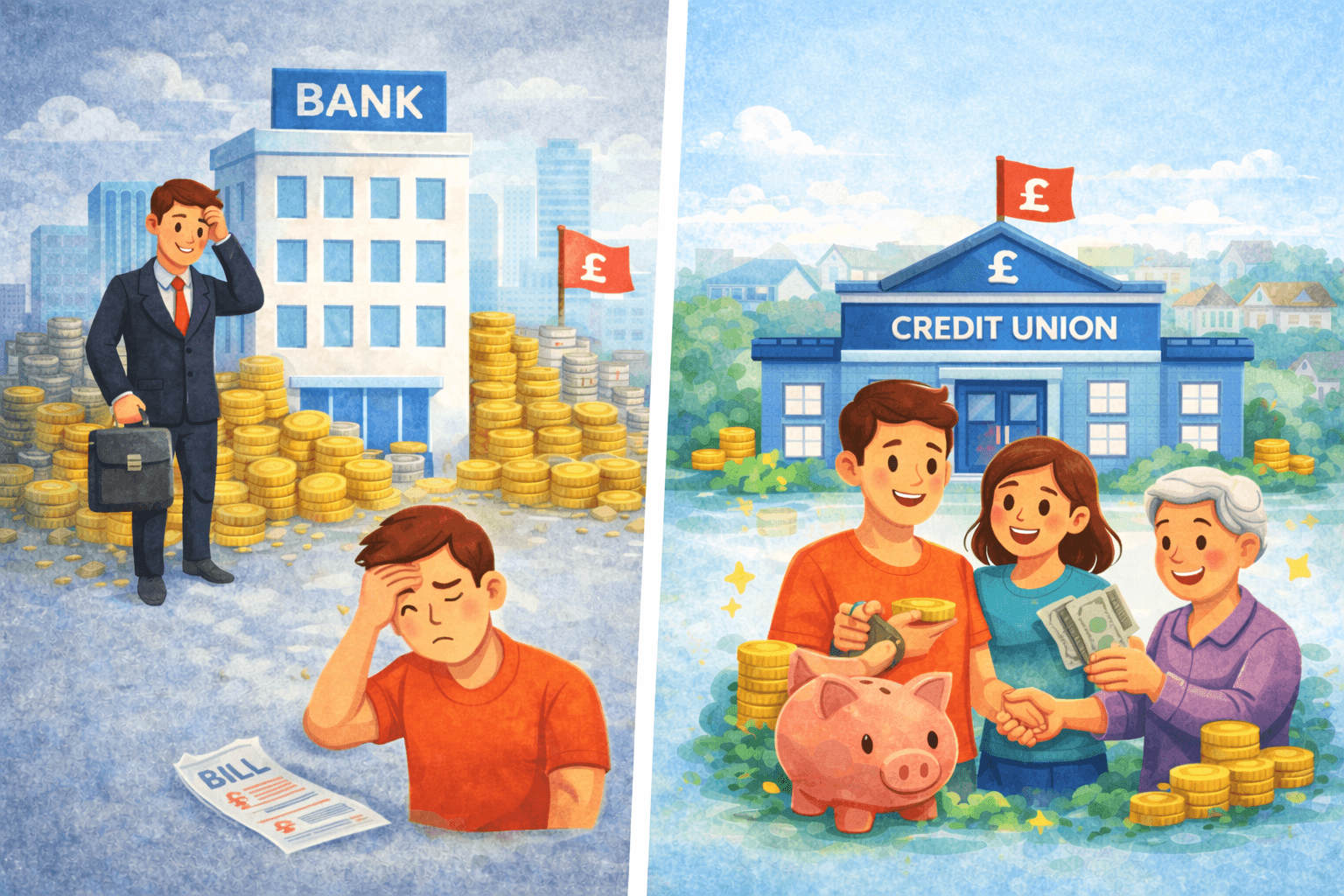
Why many financial companies don’t always put customers first...
They are driven by shareholder profit
profits are paid out to shareholders, who may not even live in the UK, let alone in the same community as customers.
They are driven by shareholder profit
profits are paid out to shareholders, who may not even live in the UK, let alone in the same community as customers.
Growth and sales targets come first
staff are often incentivised to sell products, not to recommend what’s genuinely best for the customer.
Growth and sales targets come first
staff are often incentivised to sell products, not to recommend what’s genuinely best for the customer.
Decisions are made far away from customers
policies and lending decisions are often set centrally by head offices, using algorithms rather than understanding real-life situations.
Decisions are made far away from customers
policies and lending decisions are often set centrally by head offices, using algorithms rather than understanding real-life situations.
Risk is prioritised over inclusion
people with lower incomes, irregular work, or past credit problems may be excluded, even if they can afford repayments.
Risk is prioritised over inclusion
people with lower incomes, irregular work, or past credit problems may be excluded, even if they can afford repayments.
How credit unions work differently — with members in mind...
Members are the owners
everyone who joins is a member-owner, so the credit union exists to serve its members, not external shareholders.
Members are the owners
everyone who joins is a member-owner, so the credit union exists to serve its members, not external shareholders.
Any surplus benefits members
profits are reinvested into better services, lower loan rates, or paid back to members as dividends on savings.
Any surplus benefits members
profits are reinvested into better services, lower loan rates, or paid back to members as dividends on savings.
Decisions are more personal and community-focused
credit unions often look at individual circumstances, not just credit scores or automated systems.
Decisions are more personal and community-focused
credit unions often look at individual circumstances, not just credit scores or automated systems.
The goal is long-term financial wellbeing
credit unions are designed to help members save, borrow affordably, and build financial resilience over time.

The goal is long-term financial wellbeing
credit unions are designed to help members save, borrow affordably, and build financial resilience over time.

Can't Find A Credit Union For You? Join Us
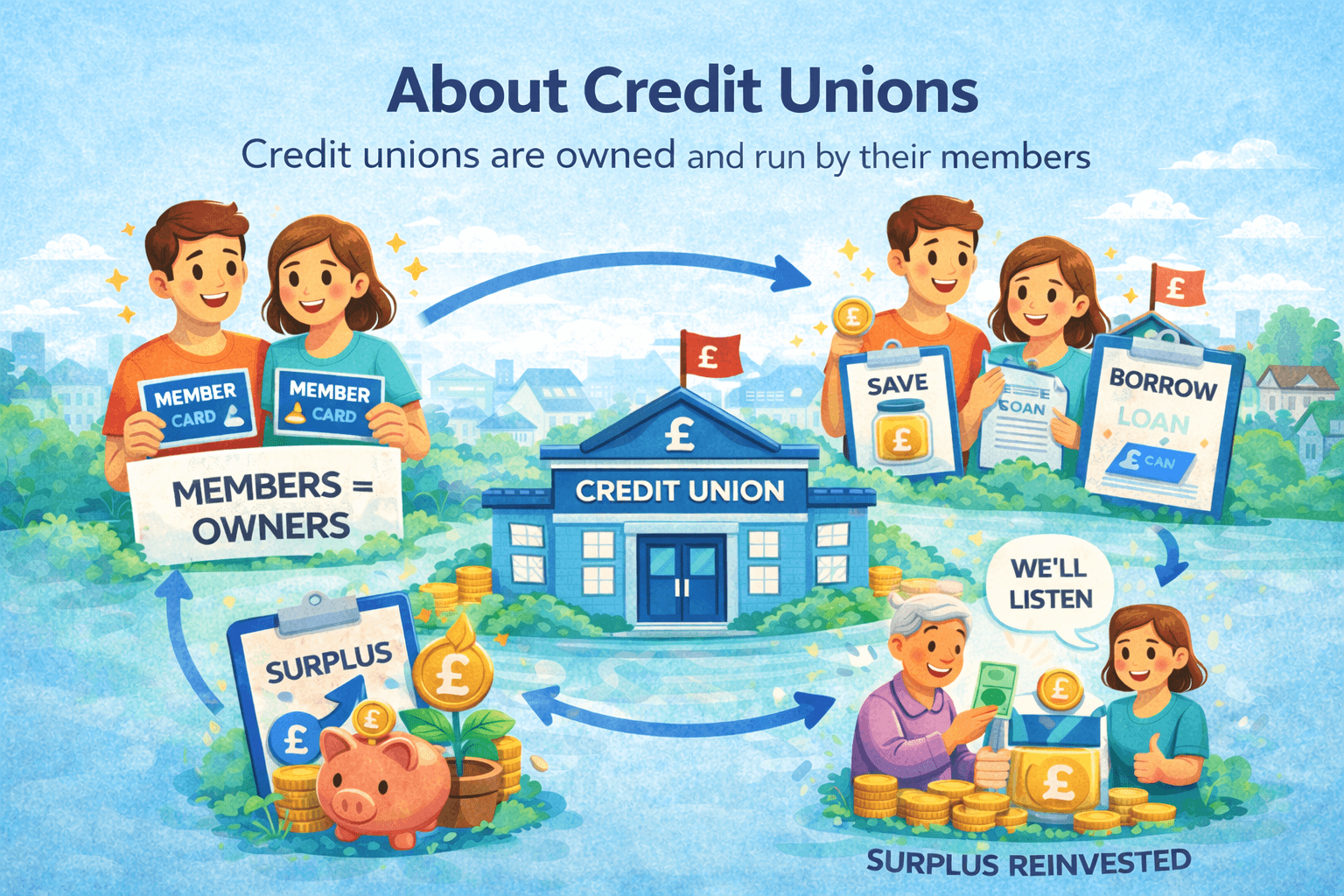
About Credit Unions
What is a credit union — and how is it different from a bank?
A credit union is owned by its members
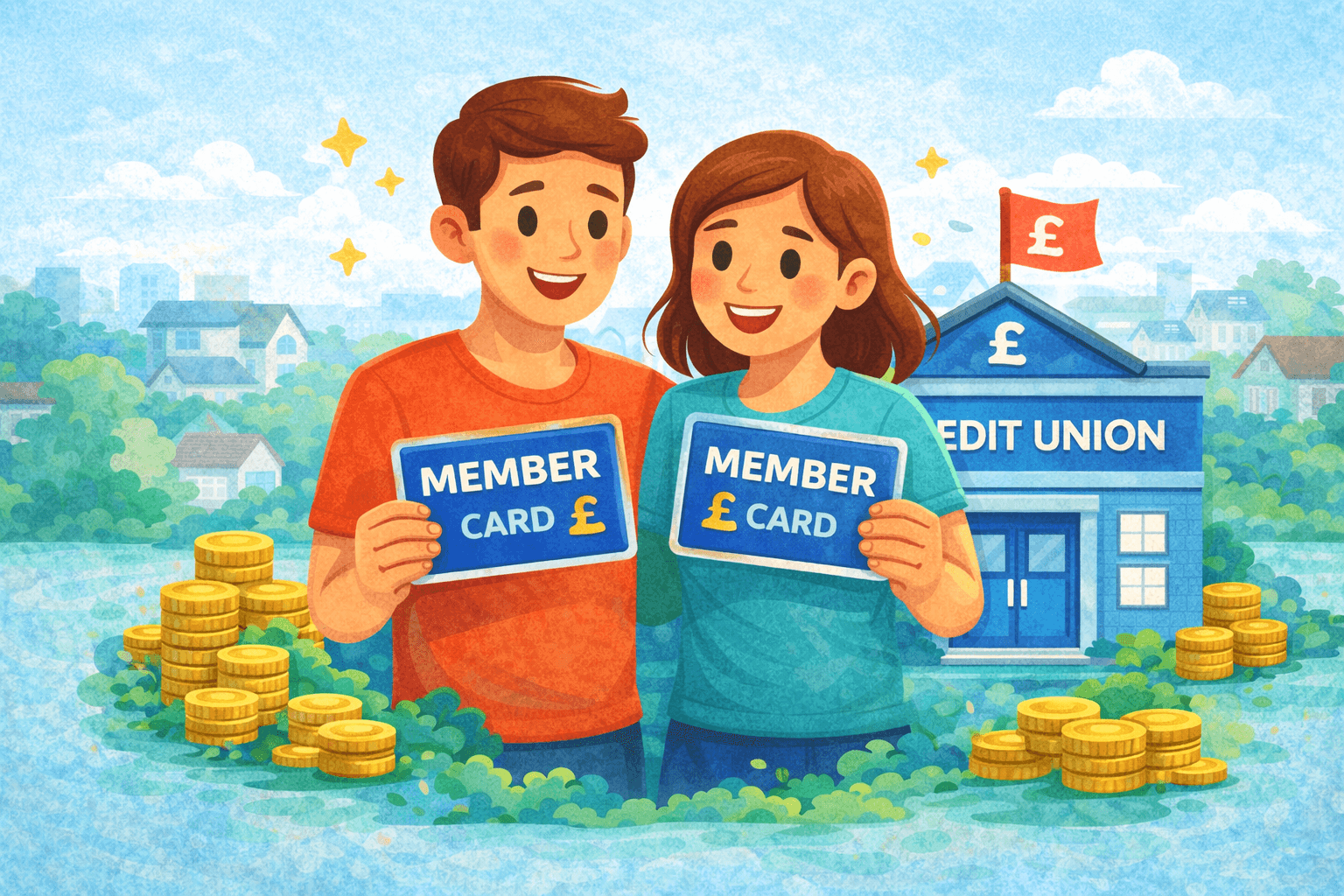
When you join a credit union, you become a member-owner, not just a customer. That means the organisation exists to benefit the people who use it, not external shareholders.

Decisions are made with members in mind
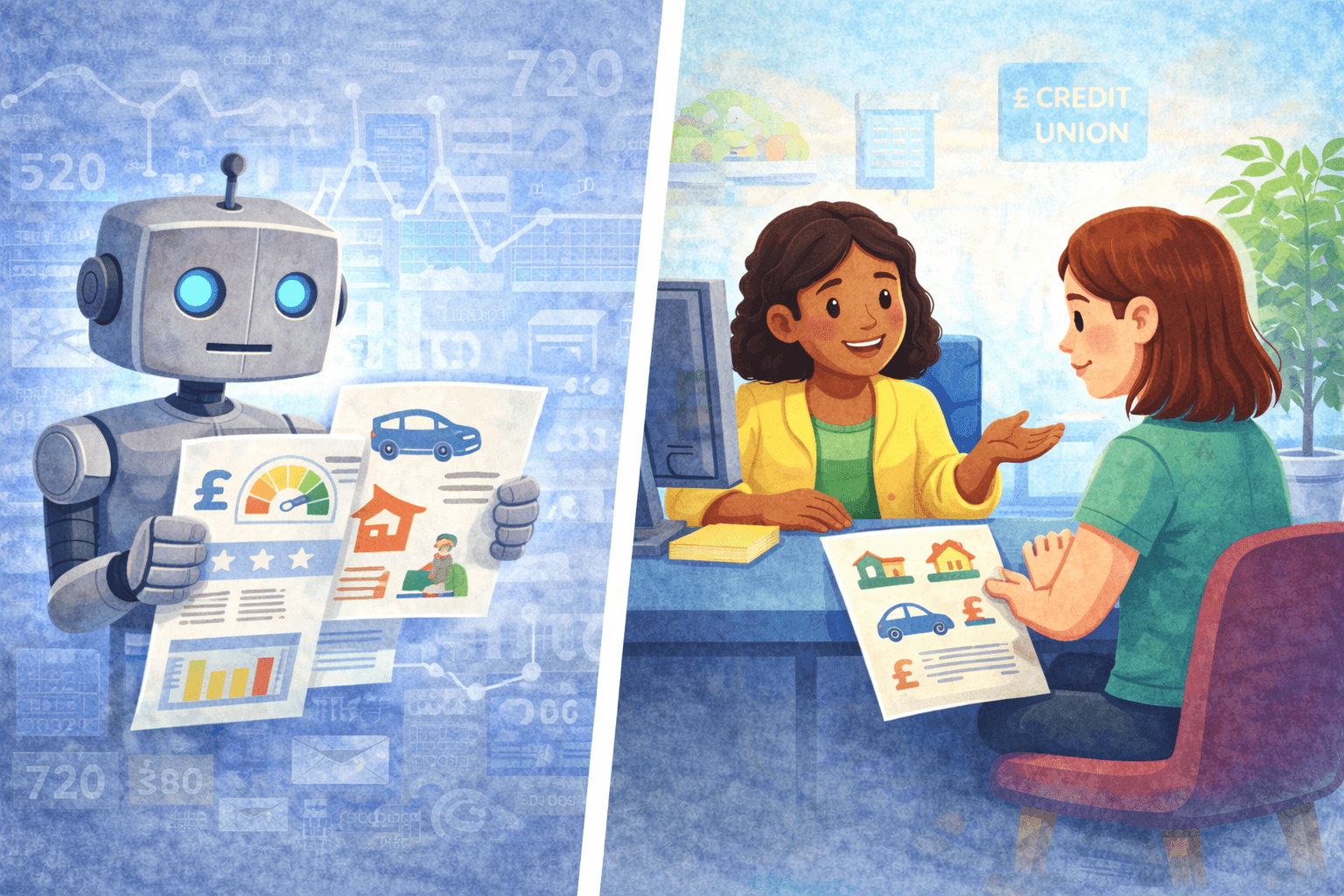
Credit unions tend to make more personal decisions, looking at real circumstances rather than relying only credit scores.

Banks are profit-driven, credit unions are people-driven
Banks are designed to generate profits for shareholders, while credit unions are not-for-profit and reinvest any surplus into better rates, services, or dividends for members.

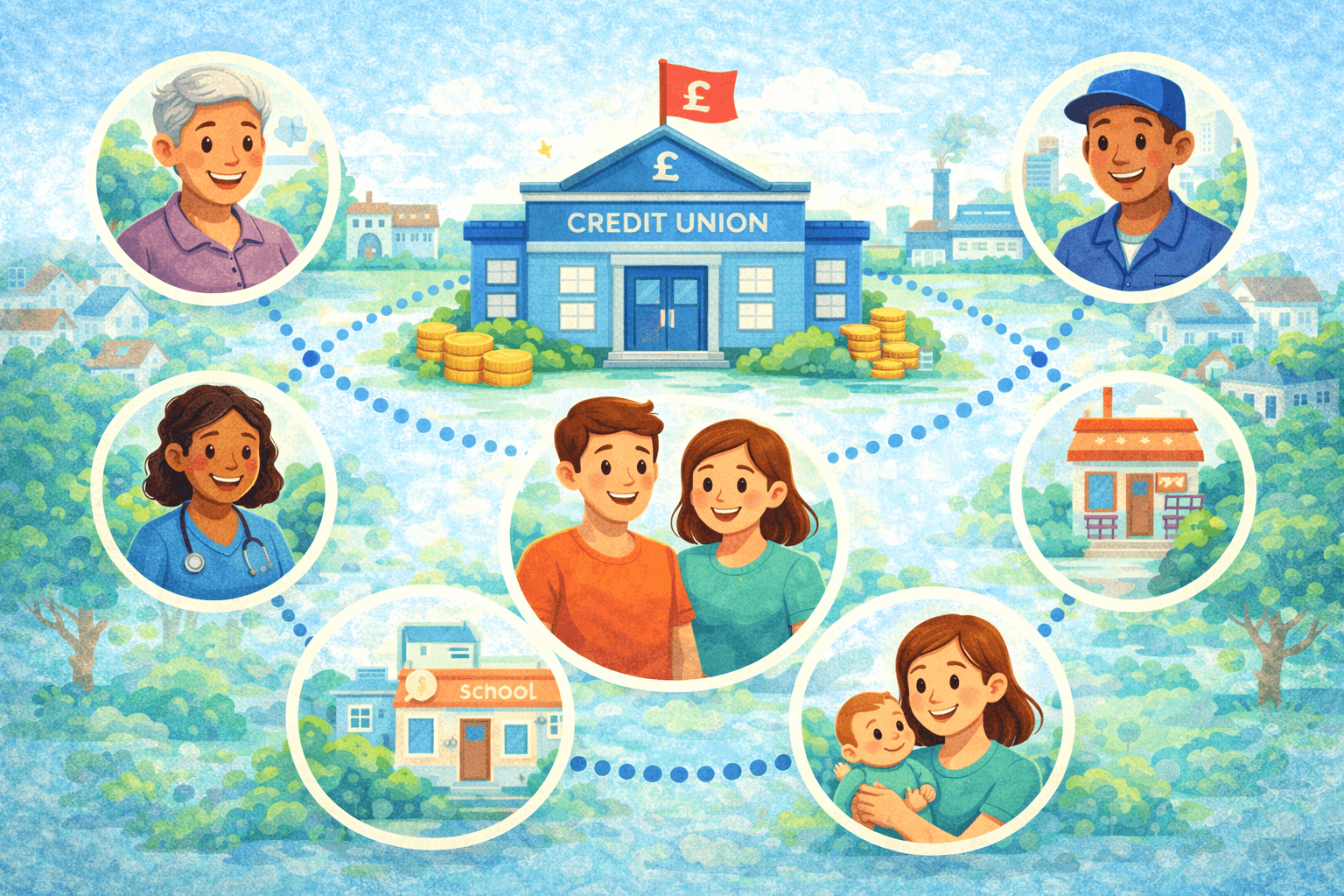
They’re rooted in communities
Most credit unions serve a specific community, workplace, or group, which helps them understand members’ needs and keep money circulating locally.

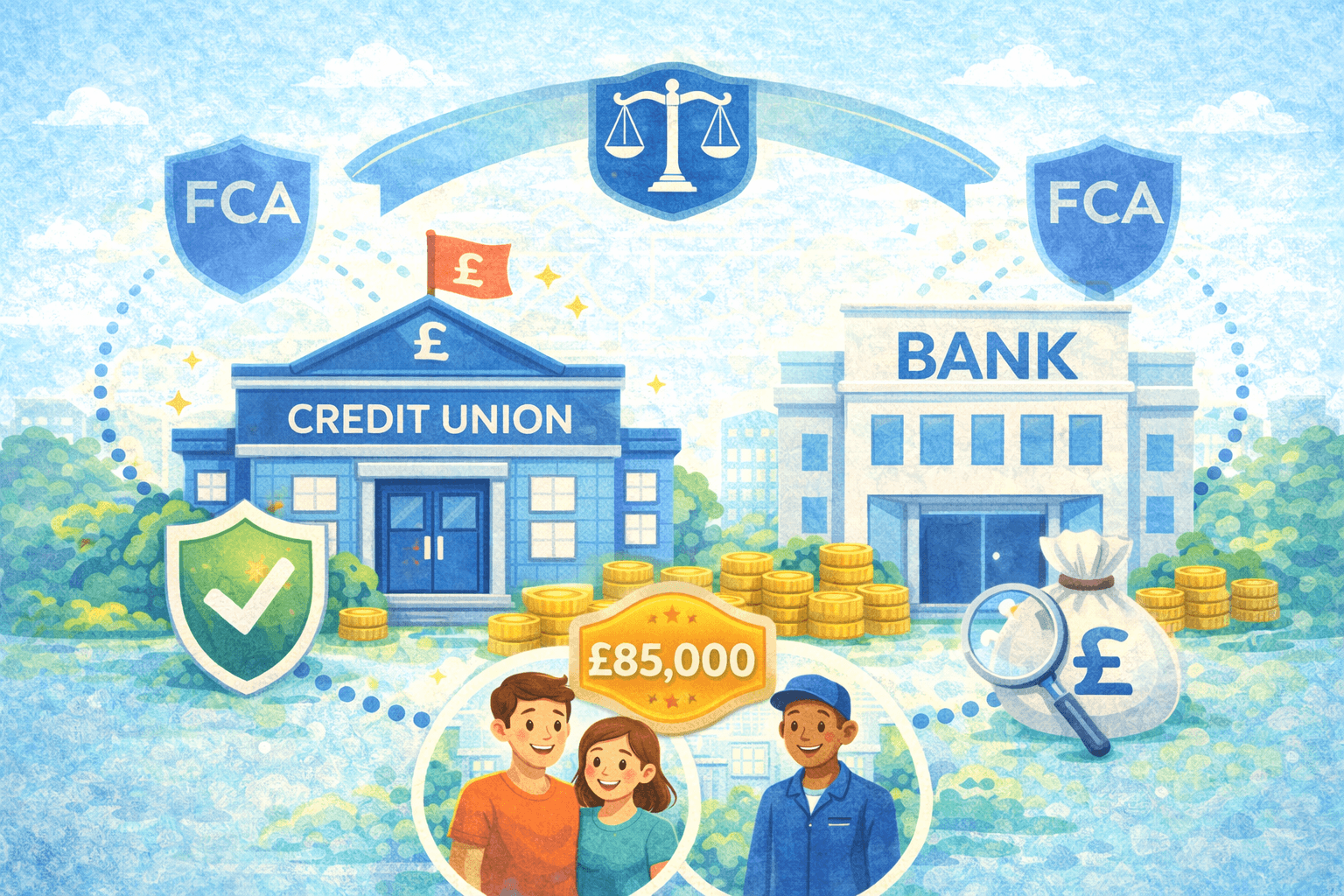
Fair, transparent, and regulated
Credit unions are fully regulated in the UK, and most credit unions have savings protected by the same £85,000 guarantee as banks, but with interest rates capped.

A credit union is owned by its members
When you join a credit union, you become a member-owner, not just a customer. That means the organisation exists to benefit the people who use it, not external shareholders.

Decisions are made with members in mind
Credit unions tend to make more personal decisions, looking at real circumstances rather than relying only credit scores.

Banks are profit-driven, credit unions are people-driven
Banks are designed to generate profits for shareholders, while credit unions are not-for-profit and reinvest any surplus into better rates, services, or dividends for members.

They’re rooted in communities
Most credit unions serve a specific community, workplace, or group, which helps them understand members’ needs and keep money circulating locally.

Fair, transparent, and regulated
Credit unions are fully regulated in the UK, and most credit unions have savings protected by the same £85,000 guarantee as banks, but with interest rates capped.

A credit union is owned by its members
When you join a credit union, you become a member-owner, not just a customer. That means the organisation exists to benefit the people who use it, not external shareholders.

Decisions are made with members in mind
Credit unions tend to make more personal decisions, looking at real circumstances rather than relying only credit scores.

Banks are profit-driven, credit unions are people-driven
Banks are designed to generate profits for shareholders, while credit unions are not-for-profit and reinvest any surplus into better rates, services, or dividends for members.

They’re rooted in communities
Most credit unions serve a specific community, workplace, or group, which helps them understand members’ needs and keep money circulating locally.

Fair, transparent, and regulated
Credit unions are fully regulated in the UK, and most credit unions have savings protected by the same £85,000 guarantee as banks, but with interest rates capped.

A credit union is owned by its members
When you join a credit union, you become a member-owner, not just a customer. That means the organisation exists to benefit the people who use it, not external shareholders.

Decisions are made with members in mind
Credit unions tend to make more personal decisions, looking at real circumstances rather than relying only credit scores.

Banks are profit-driven, credit unions are people-driven
Banks are designed to generate profits for shareholders, while credit unions are not-for-profit and reinvest any surplus into better rates, services, or dividends for members.

They’re rooted in communities
Most credit unions serve a specific community, workplace, or group, which helps them understand members’ needs and keep money circulating locally.

Fair, transparent, and regulated
Credit unions are fully regulated in the UK, and most credit unions have savings protected by the same £85,000 guarantee as banks, but with interest rates capped.
Contact us
Want to reach out to us?